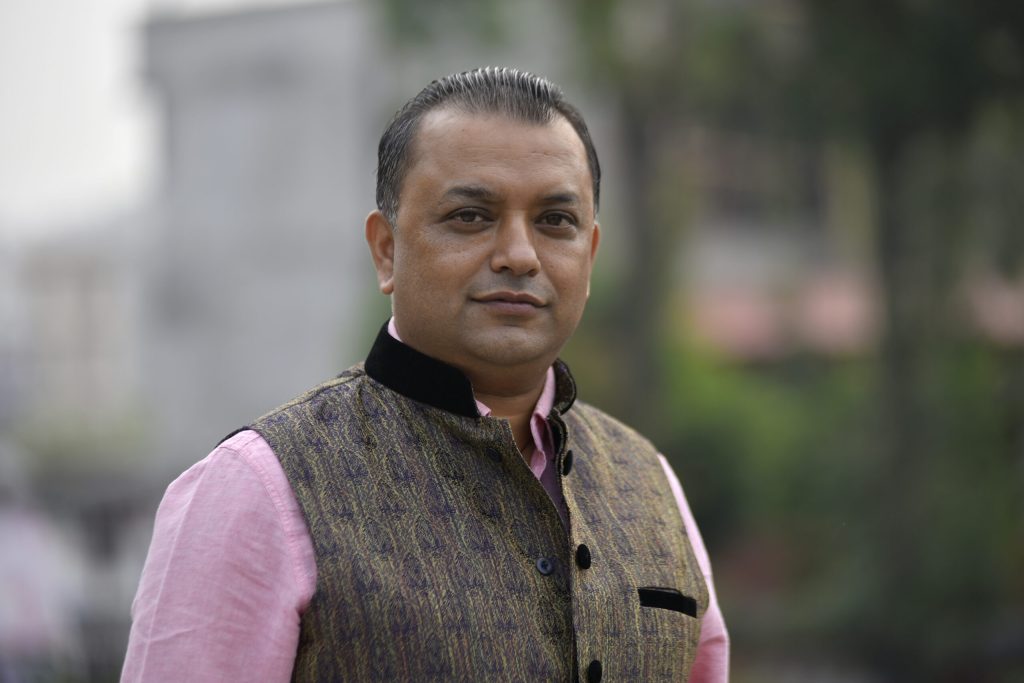
Nepal’s politics has never been short on slogans. Each crisis brings familiar faces dusting off the same tired promises of reform. But amid the noise and the chaos of the recent GenZ protests, one figure has again managed to sound different: Gagan Thapa.
For over a decade, Mr Thapa has been the darling of Nepal’s restless youth. He talks about good governance, digital transparency, and the dignity of politics, words that sound almost radical in Kathmandu. But the recent wave of youth-led protests, which shook the foundations of the old order and forced KP Sharma Oli from office, has exposed both the promise and the limits of Nepali Congress’s general secretary’s leadership.
The September protests, triggered by a government ban on social media platforms, became a rallying cry for a generation that has had enough. What began as digital outrage turned into a full-scale uprising across Kathmandu Valley and beyond. At least 76 people were killed, and the Oli government collapsed under the weight of its own arrogance.
While other parties rushed to exploit the anger, Mr Thapa struck a noticeably different tone. He didn’t glorify the violence or indulge in conspiracy theories. Instead, he called for calm, and for accountability. He demanded a full investigation into the deaths, the misuse of force, and the government’s mishandling of the situation. He also pressed his own party, the Nepali Congress, to hold a special convention, arguing that Nepal’s largest and oldest democratic force must first fix itself before claiming to fix the nation.
Yet, for all his words, Mr Thapa remains trapped in the same suffocating ecosystem that has neutered reformers before him. The Nepali Congress is a party that mistakes seniority for wisdom and compromise for leadership. Mr Thapa’s calls for internal democracy often stop short of confrontation. He apologised for his party’s role in allowing injustice and misgovernance, but he continues to work under the same leadership that embodies both.
Despite its democratic history, Congress has turned into a creature of patronage in recent years. Its internal elections are theatres of factional bargaining, not debates over ideas. Mr Thapa has risen through that structure, not against it, and that limits how far he can truly go.
The culture of obedience within the party, doubtlessly, rewards patience, not performance. Every time Mr Thapa inches toward a leadership challenge, the party’s old men remind him of hierarchy and “discipline.” Every time he calls for renewal, they invoke “unity.” And so the party drifts, old faces reappearing after every election, while Mr Thapa’s potential remains in waiting.
But compare Mr Thapa’s conduct to that of his peers. From the UML’s ageing ranks to the Maoist Centre’s recycled revolutionaries, most leaders responded to the protests with either denial or opportunism. Some blamed “foreign hands.” Others egged on unrest for political mileage. The so-called independents, meanwhile, were busy calculating how to turn outrage into local power.
Mr Thapa, by contrast, did not fan the flames. His call for introspection, accountability, and reform may not have electrified the streets, but it did offer something the country sorely lacks – maturity.
Make no mistake, Mr Thapa is not the leader Nepal needs because he is just another socialist who would foster the culture of dependency among the citizens. But he’s the only one who seems to understand that the public’s patience has expired.
Nepal doesn’t require another smooth-talking socialist or another self-styled revolutionary. But for the moment, it needs a leader who can bridge the street and the state, who can translate the rage of GenZ into the architecture of reform. Mr Thapa has the intellect, the empathy, and the communication skills to play that role.
 THE NEPALI
Leave a comment